
Leaky Ducts in West Texas Attics: Signs, Fixes, and Why It Matters Before Summer
Shannon Liccion
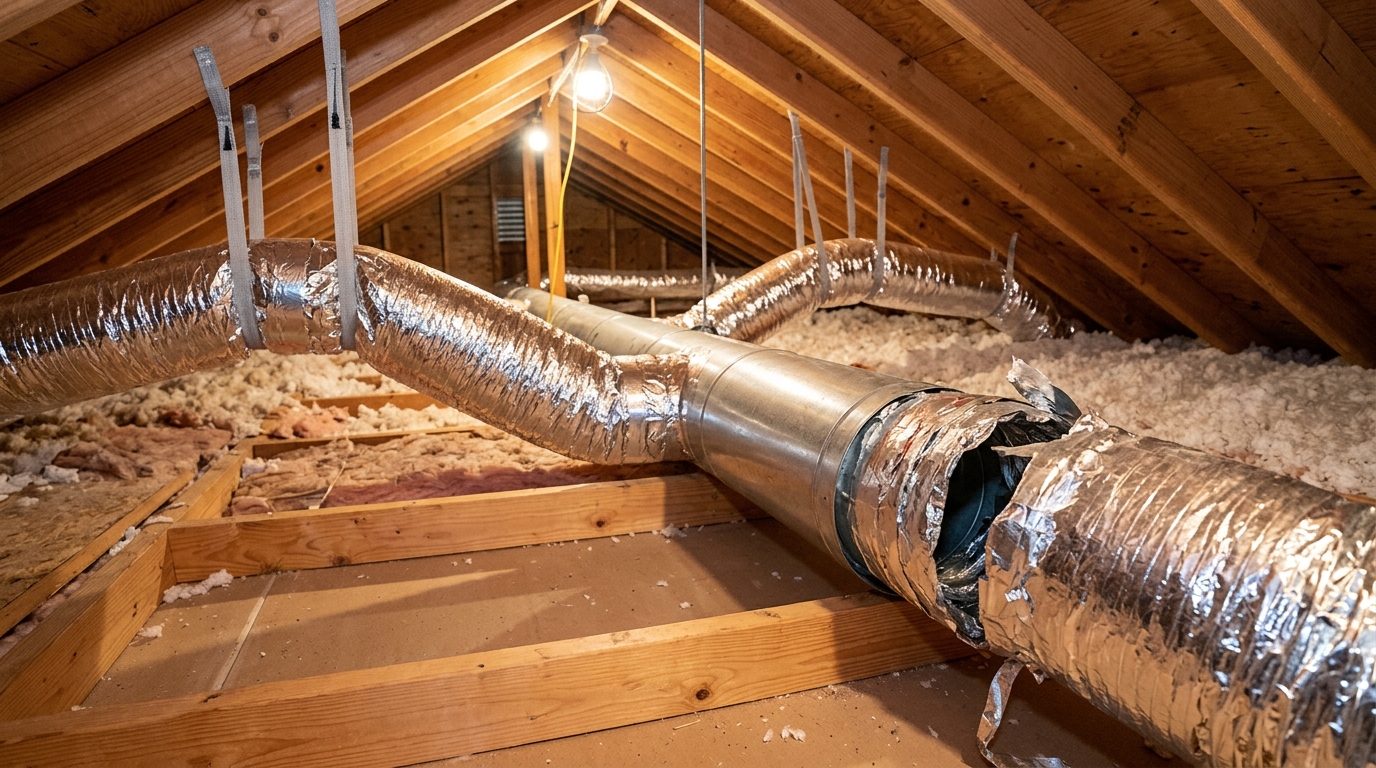
Many Big Country homes route ductwork through attics that become far hotter than the outdoor air during summer. When ducts leak or sections come apart, conditioned air can escape before it reaches the rooms that need it; uneven temperatures, weak airflow, rising utility bills, and excess dust can all point to a problem. Addressing duct issues ahead of the next cooling season can improve comfort and help reduce unnecessary strain on the air conditioner.
Why Attic Ductwork Takes a Beating in West Texas
In Merkel, Abilene, Sweetwater, Clyde, Anson, and throughout the Big Country, attic ductwork works in a demanding environment. During long stretches of hot weather, the attic can become an extremely harsh space for materials that are meant to deliver cooled air efficiently into the home.
Think of the duct system like a garden hose carrying water to different parts of a yard. If the hose has holes, loose connections, or sharp bends, less water reaches the sprinkler. Ductwork has a similar job: it carries conditioned air from the HVAC system to each room. When that pathway is damaged, disconnected, crushed, or poorly supported, cooled air may be lost in the attic instead of reaching the living space.
Older homes may have aging flex duct with worn insulation, deteriorated connections, or sagging runs. Newer homes are not immune, either. Construction activity, storage work in the attic, a past remodel, or an accidental step on a duct can create kinks, tears, or disconnected sections. Pests can also damage insulation and flexible duct materials. Over time, heat and normal settling can loosen tape, connections, and supports.
Cross Country Mechanical sees duct concerns in both older and newer homes across the area. The specific cause varies, but the result is often the same: an HVAC system that must work harder to deliver the comfort homeowners expect.
Signs Your Ducts Are Leaking
Duct leaks are not always obvious from inside the house. Because much of the system is above the ceiling, a problem can develop gradually and be mistaken for an aging air conditioner or a thermostat issue. Paying attention to patterns in comfort and airflow can help identify when the attic ductwork deserves a closer look.
Common signs include:
- One or more rooms that stay warmer than the rest of the home.
- Weak airflow from certain supply vents.
- Rooms that take much longer to cool down.
- Long AC cycles or an air conditioner that seems to run more often than expected.
- More dust around vents, furnishings, or living areas.
- Visible tears, crushed sections, loose insulation, disconnected duct runs, or drooping flex duct in the attic.
- Higher cooling bills without a clear change in how the home is being used.
Uneven temperatures are especially common when a damaged run serves a bedroom, bonus room, or addition. A kinked or partially collapsed duct can restrict the air moving through it, much like drinking through a straw with a hole or a bend in the middle. The HVAC equipment may still be running, but the air is not getting where it needs to go.
Not every comfort problem comes from the ducts. A dirty filter, equipment issue, thermostat concern, or refrigerant-related problem can create similar symptoms. Homeowners who are unsure whether the issue is ductwork or the cooling equipment can arrange AC repair
service to have the situation evaluated.
Supply Leaks vs. Return Leaks
Understanding the difference between supply and return ducts makes it easier to see why attic leaks matter. Supply ducts carry cooled air from the indoor HVAC equipment out to the rooms of the home. Return ducts carry indoor air back to the system so it can be filtered and conditioned again.
A supply leak sends conditioned air into the attic. That means the system has already used energy to cool the air, yet some of it never reaches a register. In practical terms, it is like trying to fill a room with cool air while part of the flow is being released into an unused, overheated space above the ceiling.
A return leak creates a different problem. Instead of simply losing conditioned air, a leaky return can pull hot, dusty attic air into the duct system. That unwanted air can make it harder for the system to maintain comfortable indoor temperatures and may contribute to dust concerns in the home.
Both types of leaks can affect comfort, but the symptoms may differ from one home to another. That is why Cross Country Mechanical looks at the condition and routing of the duct system rather than assuming every hot room has the same cause.
What Duct Repair and Sealing Involve
Effective duct work begins with a visual inspection of accessible attic runs, connections, insulation, and supports. The goal is to identify visible damage and practical causes of poor delivery, such as loose connections, torn flex duct, disconnected sections, crushed runs, sharp kinks, or ductwork that has sagged out of position.
Depending on what is found, duct repair
may involve reconnecting separated sections, properly supporting runs, replacing damaged portions of ductwork, sealing accessible joints, and correcting restrictions that interfere with airflow. Where appropriate, the work can also include general airflow and balance improvements so the system has a clearer path to serve different rooms.
The right fix is not always a complete overhaul. A single disconnected run may be a straightforward repair. In another home, several aging or damaged sections may need attention before the system can distribute air more consistently. Cross Country Mechanical can explain what is visible, how it may be affecting comfort, and which repairs are practical for the condition of the duct system.
For homeowners, the important takeaway is that duct repair addresses the route the air takes after it leaves the HVAC equipment. If that route is compromised, even a well-maintained air conditioner can struggle to provide consistent comfort.
Duct Repair, Duct Cleaning, or Duct Replacement?
These services solve different problems, and it is helpful to separate them before deciding what the home needs.
Duct cleaning
focuses on removing accumulated debris from inside the duct system. If dust and debris are a concern, professional duct cleaning
may be appropriate. However, cleaning alone does not reconnect a separated duct, seal a loose joint, correct a crushed run, or stop conditioned air from escaping into the attic.
Duct repair and sealing
address physical damage and air-delivery issues. This may be the more suitable path when ducts are visibly torn, kinked, disconnected, poorly supported, or leaking at accessible joints. Repairing the pathway can help air move more reliably to the rooms it is intended to serve.
Full duct replacement
may make sense when the system has widespread age-related deterioration, repeated damage, extensive insulation problems, or a layout that is no longer practical to repair section by section. Replacement is a larger decision, but it can be worth discussing when existing ductwork has reached the point where spot fixes will not provide a lasting result.
Cross Country Mechanical helps homeowners in the Big Country distinguish between these options. A dusty home does not automatically need new ducts, and a leaking duct system will not be corrected by cleaning alone. The condition of the actual ductwork should guide the recommendation.
Why Late Winter Is the Right Time
Planning ahead for late winter and the period before the next cooling season gives homeowners an opportunity to address attic duct issues before the summer workload begins. Attic work is generally more practical when temperatures are milder, and scheduling before the hottest part of the year can help avoid discovering a comfort problem after the AC is already being pushed hard.
This timing is especially useful for households considering equipment updates. A new air conditioner connected to damaged, leaking, or restricted ducts may not perform as intended because the conditioned air still has to travel through the same compromised pathway. Before moving forward with HVAC replacement, it is wise to consider the condition of the attic duct system as part of the overall comfort plan.
For families in Merkel and nearby communities, early planning can also make it easier to prioritize the work that matters most. A visible disconnect may need immediate attention, while a broader repair plan can be scheduled before sustained cooling demand returns. Either way, the focus is on giving the system a better chance to deliver conditioned air where it belongs.
FAQ
Can a duct leak make one room much hotter than another?
Yes. If a supply duct serving one room is leaking, disconnected, crushed, or kinked, less cooled air may reach that room. Other factors can contribute to uneven temperatures, but the attic ductwork is an important place to check.
Can I see duct damage myself in the attic?
Some problems are visible, including disconnected sections, torn flex duct, crushed runs, loose insulation, or ducts resting in a way that creates sharp bends. Attics can be difficult to navigate safely, so it is best to avoid stepping on or moving ductwork while investigating.
Will duct cleaning stop air leaks?
No. Duct cleaning removes debris, but it does not seal joints, repair holes, reconnect separated sections, or correct crushed duct runs. A home may benefit from cleaning and repair, but they address different needs.
Can damaged ducts make the air conditioner run longer?
They can. When cooled air escapes into the attic or airflow is restricted before it reaches the living space, the thermostat may take longer to reach the desired setting. That can lead to longer or more frequent cooling cycles.
Do newer homes need duct repairs too?
They can. While aging materials are a common issue in older homes, newer ductwork can be damaged by pests, attic storage, remodel activity, accidental pressure on flex duct, or a connection that comes loose over time.
Duct fixes completed before summer can help prevent the AC from fighting the attic all season. Cross Country Mechanical can inspect the duct system and explain what is worth fixing for homeowners in Abilene, Merkel, Sweetwater, Clyde, Anson, and surrounding Big Country communities— schedule a duct inspection to get started.