Replacing an Older AC or Heat Pump in 2027: What the Refrigerant Change Means for You
Shannon Liccion
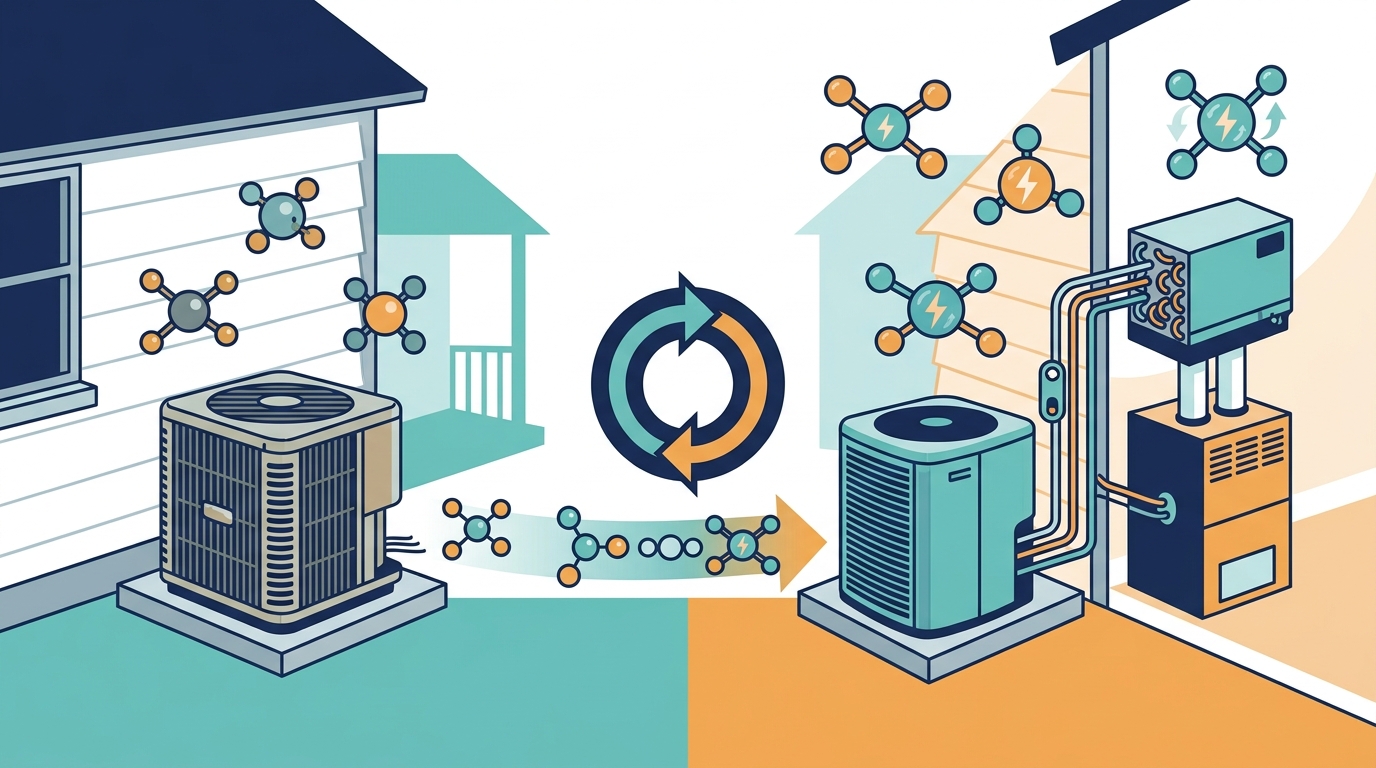
New residential air conditioners and heat pumps use lower-global-warming-potential refrigerants, including options such as R-454B, rather than R-410A. Existing R-410A systems can still be serviced and repaired, and you do not need to replace a healthy, working system solely because refrigerant rules changed. However, a major repair on an aging R-410A system—or especially an older R-22 system—is a sensible time to compare replacement options.
A Quick History: R-22, R-410A, and Now A2L Refrigerants
Refrigerant changes can sound like a reason to panic, but residential HVAC equipment has gone through transitions before. The key is understanding which change affects your particular system and what it actually means for your household.
For many years, residential air conditioners and heat pumps commonly used R-22, sometimes called Freon. New production and import of R-22 ended in 2020. That does not mean every R-22 system immediately stopped working or became impossible to repair. Reclaimed and existing stock refrigerant may still be used to service eligible equipment, although availability can become more limited as older systems remain in operation.
R-410A later became the common refrigerant in residential systems. It does not have the same ozone-depletion issue as R-22, but it has a higher global-warming potential than newer options. Under federal technology-transition rules established through the AIM Act, new residential air-conditioning and heat-pump equipment moved toward refrigerants that meet the applicable lower global-warming-potential limit beginning in 2025.
Today, homeowners shopping for a new system may hear about A2L refrigerants. R-454B is one lower-global-warming-potential refrigerant now used in the market. The important point is that the refrigerant used in a newly installed system depends on that system’s specific design. A refrigerant transition affects new equipment choices; it does not automatically make your current equipment unusable.
What ‘A2L’ Means (and Why It’s Not a Safety Worry at Home)
A2L is a safety classification used for certain newer refrigerants. It means “lower flammability,” not highly flammable. That distinction matters. These refrigerants are used in purpose-built residential systems that are designed, tested, and installed with the applicable safety requirements in mind.
New equipment can include engineered safeguards, compatible controls, appropriate sensors where required, and installation requirements intended to manage refrigerant safely. The system is not simply an older R-410A air conditioner with a different refrigerant placed inside it. It is a coordinated design built around the refrigerant it uses.
For homeowners in Merkel and across the Big Country, the practical takeaway is straightforward: choose qualified professionals for installation and service. Properly trained HVAC technicians understand the equipment requirements, follow manufacturer instructions, and use the appropriate procedures and tools. Like electrical work, gas appliances, or any other home mechanical system, safety comes from using correctly designed equipment and having it installed and maintained properly.
There is no reason to avoid a new lower-GWP system simply because you see the term A2L. A new system should be selected based on the home’s needs, the equipment’s efficiency and comfort features, and the quality of the installation—not on fear of a new industry term.
If You Have an R-22 System
If your system uses R-22, it is likely older. Age alone does not dictate replacement, but it should shape how you think about repairs. Since new production and import ended in 2020, R-22 for existing systems comes from reclaimed supplies or stock already in the market. A technician may still be able to repair an R-22 system, but a refrigerant leak or major component failure deserves a broader conversation.
An older system can also have concerns beyond refrigerant availability. Efficiency may be lower than today’s equipment, parts may be harder to source, and years of West Texas heat may have put considerable wear on the compressor, coils, wiring, and other components. If one repair solves a limited problem and the overall system is in solid condition, repairing may be reasonable. If the system has recurring issues, a significant leak, or a major failure, replacement may offer more predictable comfort and reliability.
Cross Country Mechanical helps homeowners compare those choices without treating replacement as the only answer. A clear evaluation should consider the system’s age, its maintenance history, the nature of the failure, its overall condition, and whether the repair is likely to give you dependable service through another long cooling season.
If You Have an R-410A System
Most homeowners with an R-410A system do not need to make an immediate change. R-410A parts and refrigerant remain available for servicing existing equipment. A failed capacitor, motor, control, compressor component, or other repairable part may still be replaced when it makes sense for the condition of the system.
The transition mainly changes the design of newly manufactured residential equipment. If your R-410A system is cooling effectively, has no major problems, and is being maintained, there is no rule requiring you to replace it because newer systems use a different refrigerant.
Still, an aging R-410A unit deserves a thoughtful comparison when a major repair appears. Repeated breakdowns, inconsistent cooling, rising repair needs, unusual noise, frozen coils, water around equipment, or weak airflow can all be signs your AC needs repair. They may not mean replacement is necessary, but they can help you decide whether another repair is the best use of your budget.
When the outdoor condensing unit and indoor coil both need replacement as a new matched system, current federal rules mean the replacement must use a lower-GWP design. That is a good time to discuss AC replacement
based on your home’s layout, comfort concerns, and expected time in the home. Cross Country Mechanical serves homeowners in Merkel, Abilene, Sweetwater, Anson, Tuscola, and surrounding Big Country communities with practical guidance rather than pressure.
Why New Systems Can’t Just Be ‘Mixed’ With Old Parts
One common myth is that a homeowner can replace only the outdoor unit with any available model and connect it to the old indoor equipment. In reality, an air conditioner or heat pump is a matched system. The outdoor unit, indoor coil, refrigerant circuit, metering devices, controls, and other components need to be compatible with one another.
New lower-GWP equipment is designed around its approved refrigerant and its specific operating characteristics. An older indoor coil or set of controls may not be compatible with that design. Mixing components that were not designed to work together can affect performance, reliability, warranty coverage, and safety requirements.
This does not mean every repair requires a new line set or a full system replacement. The condition and compatibility of existing components must be evaluated for the particular equipment and installation. It does mean that a proper replacement recommendation should be based on the whole system—not a shortcut that pairs unrelated equipment because it seems convenient.
As a Trane Comfort Specialist, Cross Country Mechanical can help homeowners understand matched-system recommendations and compare equipment options, including Trane air conditioners. The goal is to install equipment that is appropriately sized, compatible, and prepared to deliver dependable comfort in the Big Country climate.
Planning a Replacement on Your Timeline, Not Your AC’s
West Texas has a long cooling season, and an unexpected equipment failure during extreme heat can turn a careful decision into an urgent one. Planning ahead gives you more time to understand your system’s condition, discuss repair-versus-replacement scenarios, and choose equipment without the pressure of a mid-summer breakdown.
Late winter and early spring are often useful times to start that conversation. Your cooling system may not be under its heaviest load, yet warm weather is close enough to make comfort priorities clear. If you know a system is older, has needed repeated repairs, or uses R-22, an evaluation before peak summer can help you prepare.
Regular service also matters. A professional tune-up can help document system condition, identify developing concerns, and provide a clearer record of maintenance. Cross Country Mechanical’s maintenance plan
can help homeowners stay on top of routine care rather than waiting for a small issue to become an emergency.
A replacement decision should not be driven by a refrigerant label alone. Consider your system’s age, repair pattern, comfort performance, maintenance history, and how long you expect to remain in the home. A healthy system may continue to serve you well. A system approaching a major repair may be the right opportunity to compare the long-term value of a new, properly matched installation.
The refrigerant transition is primarily a planning question, not a reason to replace equipment before it is needed. Cross Country Mechanical can identify the refrigerant in your current system, assess its condition, and explain repair versus replacement so you can schedule an evaluation with confidence and explore financing if replacement is the right path for your home.