
West Texas Dust and Your HVAC System: Filters, Air Cleaning, and Cleaner Indoor Air
Shannon Liccion
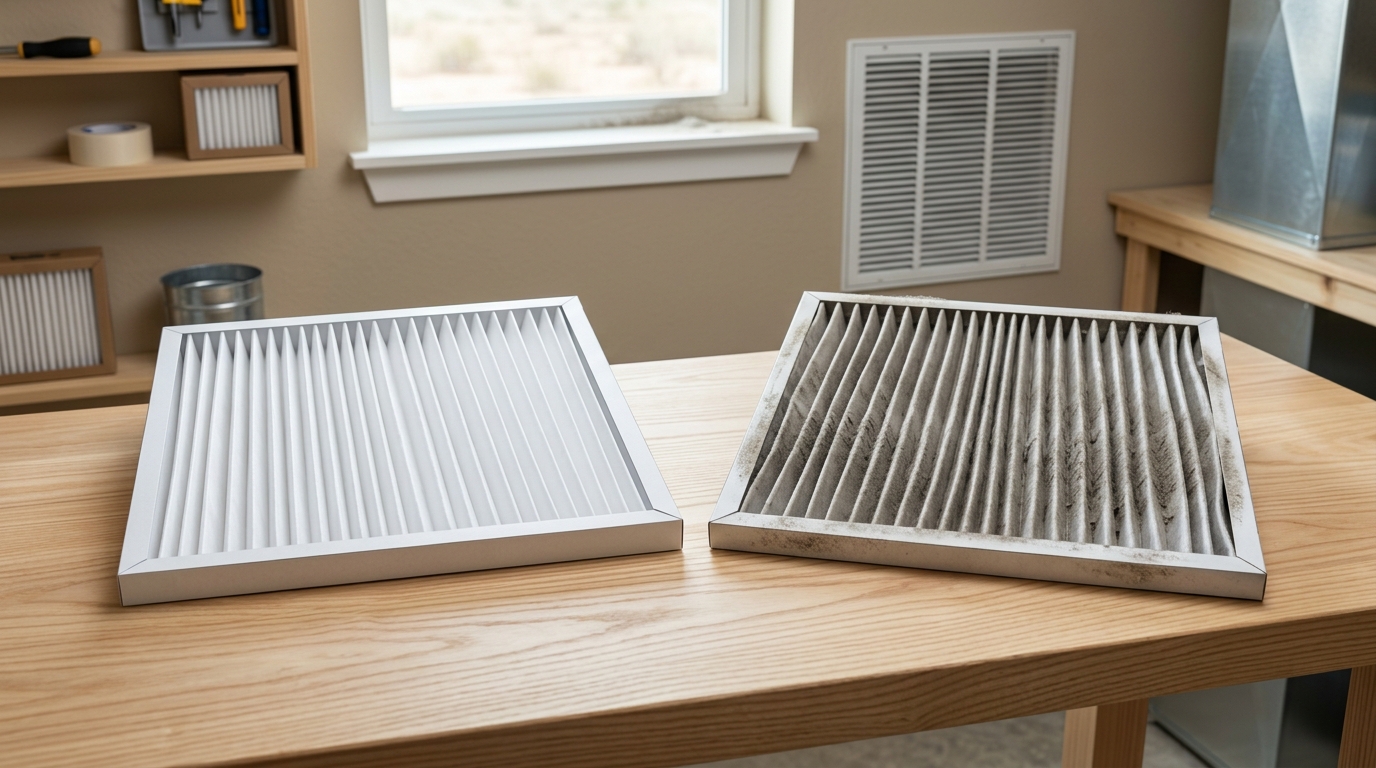
West Texas dust can enter a home through outside air, gaps around the building, frequently opened doors, leaky return ducts, and filtration that does not capture finer particles. The best improvement often combines the right filter changed on schedule, correction of leaks that pull attic dust into the system, and, in some homes, a whole-home air cleaner. Dust buildup can also coat HVAC coils and blowers, reducing performance and making it harder for the system to keep your home comfortable.
Why Dust Is Such a Problem in Big Country Homes
Dust is a fact of life across the Big Country. In Merkel, Abilene, Sweetwater, Clyde, and Tuscola, dry soil, open rural land, agricultural activity, unpaved areas, and strong seasonal winds can all contribute to the dust that settles inside a home.
Most homeowners recognize the pattern: a windy day rolls through, and soon there is a light film back on the TV stand, a gritty feel along the window sills, or dust collecting around supply vents. Even homes that are kept tidy can experience this cycle because outdoor particles find multiple paths indoors.
Some dust enters whenever exterior doors open. Other particles can slip through small gaps around doors, windows, utility penetrations, or attic access points. A home does not need a visibly large opening for outdoor air to make its way inside; small leaks spread across several areas can add up, particularly when wind pressures change around the house.
In many homes, the HVAC system also plays a role in how dust moves. Return ducts are designed to pull indoor air back to the equipment for conditioning. If a return duct has gaps, loose connections, or damage in an attic, crawlspace, garage, or other unconditioned area, it may draw in dusty air before that air reaches the filter. That means the system may be moving more dust through the home while working harder than it should.
What Dust Does to Your HVAC System
Not all dust stays on furniture. Airborne particles travel through return grilles, filters, ductwork, and HVAC equipment. A properly selected and maintained filter catches a portion of those particles, but filters eventually load up. When they do, airflow can become restricted.
Restricted airflow affects comfort and efficiency. Your system may run longer to deliver the same heating or cooling, and rooms may feel less consistent from one area of the house to another. In a West Texas summer, inadequate airflow can contribute to an evaporator coil becoming excessively cold and, in some circumstances, icing over. A frozen coil is not always caused by a dirty filter, but airflow problems are one important issue that should be evaluated.
Fine dust that passes beyond an overused, poorly fitted, or unsuitable filter can settle on the evaporator coil and blower components. The evaporator coil is responsible for absorbing heat from your indoor air during cooling. When its surface becomes coated with buildup, the system may not transfer heat as effectively. Dust on the blower can also interfere with the amount of air the equipment moves.
These issues typically develop gradually. You may notice longer run times, weaker airflow, rising utility use, or more dust circulating after the system starts. Regular service gives Cross Country Mechanical an opportunity to inspect components that homeowners do not normally see and identify buildup or airflow concerns before they become more disruptive.
Choosing the Right Air Filter
Air filters are often the first and most practical line of defense against household dust. Their job is not only to help keep particles from recirculating, but also to help protect the HVAC equipment from dirt accumulation. The challenge is choosing a filter that balances particle capture with the airflow needs of your specific system.
MERV is a rating that describes how effectively a filter can capture particles within certain size ranges. In simple terms, a higher MERV rating generally means the filter is designed to capture smaller particles more effectively. However, higher is not automatically better for every home.
Denser filters can create more resistance to airflow. If an HVAC system is not designed or configured to handle that resistance, installing the highest-rated filter available may reduce airflow rather than improve overall performance. The right choice depends on the equipment, filter cabinet, duct design, household conditions, and the manufacturer and system guidance.
For dusty conditions in the Big Country, check your filter monthly. A filter may need replacement sooner after windy weather, construction nearby, harvest activity, a period of heavy system use, or other conditions that increase indoor dust. Replace it according to its visible condition and the manufacturer and system guidance rather than relying only on the number of months printed on the package.
Also make sure the filter fits correctly. A filter that is bent, improperly sized, or left with gaps around its edges can allow unfiltered air to bypass the media. Cross Country Mechanical can help homeowners in Merkel and surrounding communities determine whether their current filter setup supports both better dust control and healthy system airflow.
Whole-Home Air Cleaning vs. Portable Units
For homes where dust remains a persistent concern despite good filter habits, whole-home air cleaning may be worth discussing. Whole-home equipment is installed as part of the HVAC system so it can treat air as it circulates through the return and supply system. This approach can provide more consistent coverage throughout the home than a single device placed in one room.
Portable units can be useful for a targeted area, such as a bedroom, office, or living room. Their effectiveness depends on the unit’s capacity, the size of the room, placement, operating time, and whether doors remain open or closed. They do not address dust entering through leaky ductwork, gaps in the home, or the buildup that may already be affecting HVAC components.
A whole-home solution is not a substitute for basic maintenance or for fixing a duct leak. It is one piece of a broader approach that can include properly selected filtration, duct inspection, and attention to the routes through which outdoor dust enters. Cross Country Mechanical offers indoor air quality solutions
that can be tailored to the conditions inside your home and the way your HVAC system operates.
Improved filtration and air cleaning may help reduce airborne particles and may support a more comfortable environment. Still, no system eliminates all dust. The realistic goal is meaningful reduction, better equipment protection, and a home that feels easier to keep clean.
When Ducts Are Part of the Problem
Ducts can be both a pathway for dust and a source of it. When ducts contain accumulated debris, duct cleaning
may help remove material that has settled within the system. This can be especially useful after renovation work, if there is a noticeable buildup in accessible duct areas, or when dust has been circulating for an extended period.
However, cleaning is not always the most useful first step. If return-side ductwork is leaking in an attic or another dusty unconditioned space, the system may continue pulling in new dust after cleaning is complete. In that situation, duct repair and sealing
can be the more important solution because it addresses how the dust is getting into the airflow in the first place.
Signs that ductwork deserves attention include dusty air around return grilles, persistent dust even with regular filter changes, uneven temperatures, weak airflow, unusual attic odors when the HVAC system runs, or visible damaged and disconnected duct sections. Duct concerns are not always obvious from inside the living space, which is why an inspection can be valuable.
For homeowners in Abilene, Sweetwater, Clyde, and throughout the Big Country, the most effective plan often starts with identifying whether the dust is entering through the home’s exterior, the HVAC return path, or both. Once the source is clearer, cleaning, sealing, filtration, or a combination of services can be recommended with a purpose.
Simple Habits That Cut Indoor Dust
West Texas wind cannot be controlled, but a few consistent habits can reduce the amount of dust that collects indoors and help your HVAC system operate more reliably.
- Check filters regularly. Look at the filter monthly during dusty conditions and replace it when it is visibly loaded or when manufacturer and system guidance indicates replacement is due.
- Seal obvious building gaps appropriately. Weatherstripping around exterior doors, attention to worn door sweeps, and properly sealed openings around utility lines can reduce unwanted outdoor air infiltration. For larger or less obvious leaks, professional guidance may be helpful.
- Keep supply and return vents clear. Do not block vents with furniture, rugs, boxes, or curtains. Clear airflow helps the system move air as intended and makes it easier to notice changes in performance.
- Clean high-dust surfaces strategically. Wiping window sills, entry areas, and frequently used surfaces after windy days can prevent settled dust from becoming airborne again.
- Schedule routine equipment care. Professional HVAC maintenance can include inspection of airflow, coils, blower components, filters, and other areas where dust buildup may affect performance.
It is also helpful to pay attention to patterns. If dust seems much worse after the system runs, if one part of the home gets dirtier than another, or if a filter becomes heavily loaded unusually fast, those details can point to an airflow or ductwork concern. Sharing those observations with a technician can make the evaluation more productive.
The correct fix depends on where the dust is coming from. Cross Country Mechanical can review your filtration, ductwork, and equipment in one visit to help identify practical next steps for a cleaner, more comfortable home. Schedule an indoor air quality evaluation to get started.