
Why Is My Heat Pump Blowing Cold Air? Defrost Mode, Aux Heat, and When to Call
Shannon Liccion
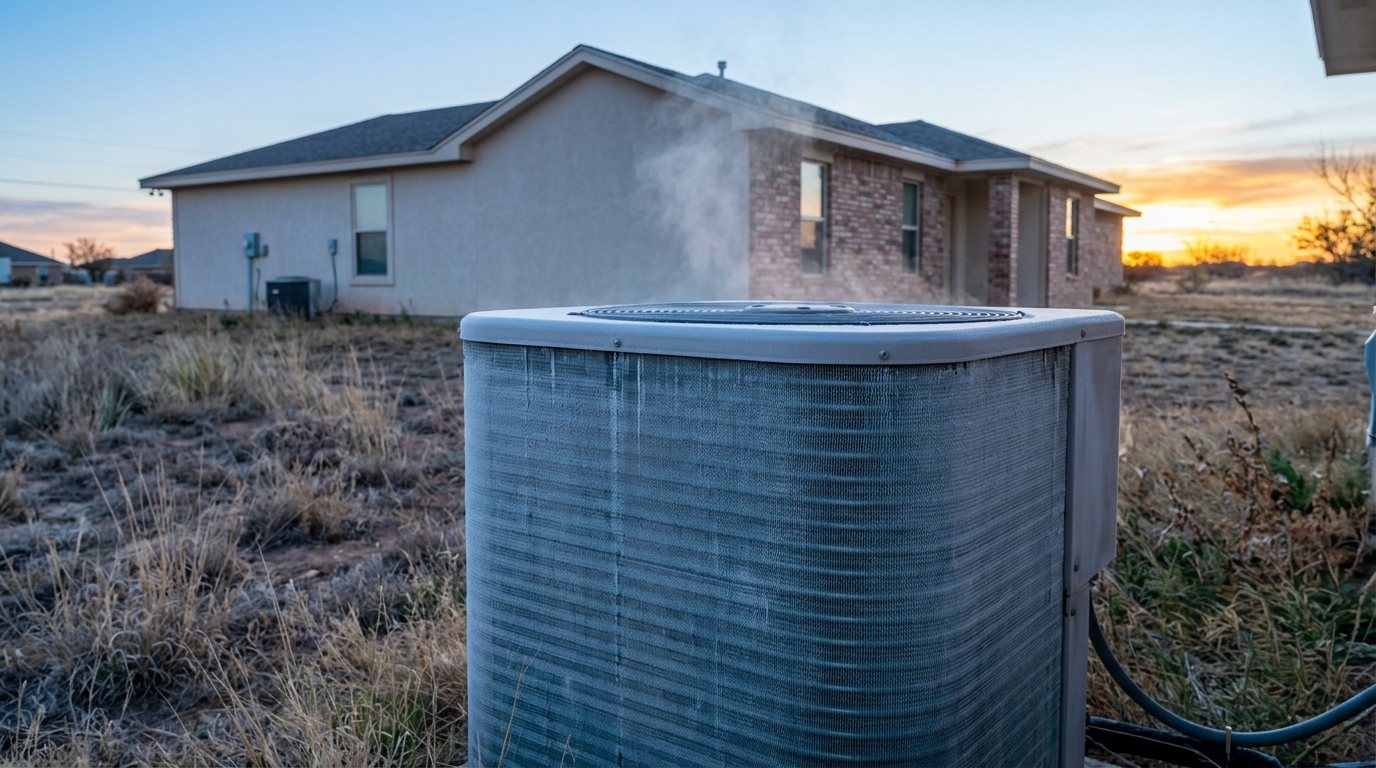
Heat-pump air often feels cooler than furnace air even when the system is working properly, typically arriving in roughly the 90s°F rather than the 120s–130s°F many people associate with a gas furnace. A short burst of cooler air during defrost can also be normal. However, consistently cold air, ice that does not clear, or a constant need for auxiliary heat deserves professional attention.
Heat Pump Heat Feels Different — and That’s Usually Normal
When a cold front moves through Merkel, it is understandable to expect the warm, hot-air feeling of a traditional gas furnace. A heat pump works differently. Rather than creating heat by burning fuel, it transfers available heat from outdoor air into your home—even when outdoor temperatures feel chilly.
That process produces steady, comfortable heat, but the supply air is usually gentler. Air from a register may be roughly in the 90s°F, while gas-furnace air is often closer to the 120s–130s°F range. It can feel cool against a hand even though it is warmer than the room and is gradually raising the indoor temperature.
Heat pumps also tend to run longer cycles than furnaces. Long, even operation is often how the system maintains comfort efficiently during Big Country temperature swings. If the home is warming, the thermostat is holding its setting, and the air is not truly cold, a longer run time alone is not necessarily a problem.
What Defrost Mode Is and Why It Happens
A defrost cycle
is an automatic process that removes frost from a heat pump’s outdoor coil. In cold, damp weather, moisture in the air can freeze on that coil and reduce the system’s ability to collect heat.
During defrost, the heat pump briefly reverses its normal heating operation to send warmth to the outdoor coil and melt accumulated frost. You may see steam rising from the outdoor unit, hear a change in its sound, or notice that the outdoor fan pauses. Those signs can look alarming, but they are often normal.
Because the system temporarily reverses, you may feel a short period of cooler indoor air. Auxiliary heat may come on to help offset that change. Once the frost has melted, the heat pump should return to normal heating operation. A light coating of frost on the outdoor unit during a cold, damp morning in Abilene, Anson, or nearby communities is not automatically a reason to worry. Heavy ice that stays in place is different.
Aux Heat vs. Emergency Heat: What Your Thermostat Is Telling You
Auxiliary heat, often shown as “Aux Heat,”
is supplemental electric heat that starts automatically when the heat pump needs assistance. It may engage during colder weather, while the system is recovering from a thermostat adjustment, or during a defrost cycle.
Emergency heat, often shown as “Em Heat,”
is a manual backup setting intended for use when the heat-pump portion of the system has failed or should be taken out of operation. It generally relies on electric heat strips rather than the heat pump’s normal, more efficient operation.
Seeing Aux Heat occasionally does not necessarily mean something is wrong. But if it appears constantly in moderate weather, the heat pump may not be carrying its share of the heating load. Emergency Heat should not be left on for days as a routine setting. It can use considerably more electricity, and extended use is a good reason to arrange an inspection.
Some homeowners use a dual-fuel configuration, where a heat pump works alongside another fuel-burning heat source. Those systems have their own control settings and changeover points, so it is important to have a technician evaluate unusual operation rather than relying on a one-size-fits-all thermostat setting.
Common Reasons a Heat Pump Actually Blows Cold Air
Sometimes the explanation is simple. A thermostat set to “Fan On” instead of “Auto” can keep the blower moving air between heating cycles. That air may feel cool because the system is not actively heating at that moment. An incorrect system mode, a low thermostat setpoint, or a thermostat programming issue can create similar confusion.
A dirty air filter is another common culprit. Restricted airflow can make heating less effective, strain system components, and contribute to comfort problems. Replacing a dirty filter with the correct size and type is one of the most useful homeowner maintenance steps.
Outside, leaves, grass, plastic bags, or other debris can block airflow around the outdoor unit. The unit needs clear space to exchange heat with the air. Frost is normal at times; a coil packed in ice is not. A failed defrost control, sensor, or related component can prevent the system from clearing itself properly.
Other causes require professional diagnosis. Low refrigerant caused by a leak can reduce heating capacity. A reversing-valve fault can keep the system from switching correctly between heating and cooling. Failed heat strips may leave the system without needed backup heat during defrost or low outdoor temperatures. Tripped breakers, wiring problems, and electrical component failures can also stop part of the system from operating as designed.
If your system is blowing air that is genuinely cold—not just gentler than furnace heat—and the indoor temperature is falling, do not assume it will correct itself after a few hours.
When to Call a Technician
There are a few basic items you can safely check before calling Cross Country Mechanical:
- Confirm the thermostat is set to Heat, not Cool or Fan Only, and set the fan to Auto.
- Check the air filter and replace it if it is dirty or heavily loaded with dust.
- Make sure the outdoor unit has reasonable clearance from leaves, grass, branches, and other debris.
- Check visible electrical breakers. If one has tripped, reset it once only if it is safe to do so; if it trips again, leave it off and call a professional.
There are also important things not to do:
- Do not chip, scrape, or strike ice from the outdoor coil. The fins and refrigerant lines can be damaged easily.
- Do not open equipment panels or attempt to repair electrical or refrigerant components yourself.
Call for service if the outdoor unit remains encased in ice for more than an hour or two, cold air continues through multiple defrost cycles, Aux Heat runs constantly, unusual noises develop, or breakers trip repeatedly. Those symptoms can point to a problem that needs more than a thermostat adjustment or filter change.
For homeowners in Merkel, Abilene, Anson, and nearby communities, Cross Country Mechanical provides professional heat pump repair
for major residential brands. As a family-owned HVAC company and Trane Comfort Specialist, the team can identify whether the issue involves airflow, controls, defrost operation, refrigerant, electrical components, or another part of the system.
Is Your Heat Pump Ready for a Real Cold Snap?
Big Country weather can shift quickly, and a heat pump that seems fine during mild conditions may reveal a problem when temperatures drop sharply. The best preparation is to make sure airflow is unrestricted, the thermostat is operating correctly, and the system has been inspected before a prolonged cold spell places greater demand on it.
Regular seasonal maintenance
helps catch worn electrical parts, dirty coils, defrost concerns, and other issues before they become a comfort problem. It also gives a technician an opportunity to verify that auxiliary heat is available when the system needs it.
Cross Country Mechanical services residential heat pumps throughout Merkel, Abilene, Sweetwater, Anson, Clyde, and surrounding Big Country communities. For homeowners with Trane heat pumps, working with a Trane Comfort Specialist can add confidence that the system is being evaluated with the manufacturer and equipment type in mind.
Many cold-air complaints turn out to be normal heat-pump operation or straightforward fixes. If you are unsure what your system is doing, Cross Country Mechanical can diagnose the cause and explain it clearly— schedule a heating service visit to get answers for your home.